
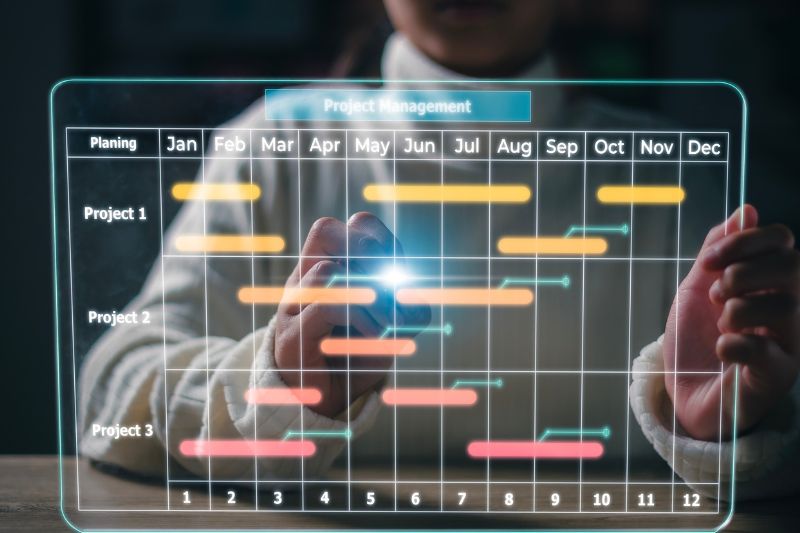


In complex industries such as oil & gas, construction, energy and large-scale infrastructure, projects typically involve multiple contractors, overlapping timelines and high levels of technical interdependence. Without a clear structure governing all phases of execution, delays, disputes and cost overruns become almost inevitable. This is where the Master Schedule becomes indispensable: it is not simply a timeline, but a strategic tool that aligns stakeholders, defines priorities and prevents conflicts before they emerge.
As project demands grow and execution windows shrink, organizations need more than isolated task plans—they need the ability to see the full project ecosystem at once. A Master Schedule provides exactly this visibility.
A single source of truth
A Master Schedule integrates every component of a project: design, procurement, logistics, construction, commissioning and closure. Instead of each team working with disconnected planning tools, the Master Schedule acts as a single source of truth. This ensures that all participants understand how their tasks impact others, where dependencies lie and what milestones cannot be compromised.
For example, in an oil facility expansion or a civil construction project, delays in procurement affect installation crews, which in turn delay testing and commissioning. With a unified schedule, these risks become visible early, allowing decision-makers to take corrective action.
Conflict prevention through clarity
One of the most powerful functions of a Master Schedule is its ability to prevent disputes. In environments where multiple contractors or subcontractors coexist, misunderstandings about scope, deadlines or sequencing often lead to conflict. A well-developed Master Schedule eliminates ambiguity by:
- clearly defining responsibilities
- showing interdependencies between teams
- establishing realistic but firm deadlines
- aligning the entire project under a shared milestone roadmap
This reduces friction and improves collaboration by making expectations transparent.
Improving change management
Every major project faces change—scope modifications, design revisions, supply chain delays or unexpected site conditions. When change occurs without a structured system, teams tend to enter “firefighting mode,” rushing to fix problems instead of anticipating them.
The Master Schedule gives project managers the ability to analyze the impact of any change on the broader timeline. Instead of reacting blindly, leaders can:
- evaluate delay scenarios
- reallocate resources
- adjust task sequences
- communicate updates clearly to stakeholders
By incorporating risk buffers and contingency plans, the Master Schedule also helps avoid the domino effect that a small change can cause in a large project.
Enhancing communication and accountability
Projects suffer when communication is inconsistent or poorly documented. The Master Schedule acts as a communication backbone. It provides a structured environment where meetings, reports, dashboards and progress updates are standardized.
Accountability becomes easier when the Master Schedule highlights delays, slippages and deviations in real time. Teams understand not only what they must deliver, but how delay in their work affects the entire value chain. This creates a culture of responsibility instead of reactive problem solving.
Supporting data-driven decisions
Modern Master Schedules are built using advanced digital tools that provide analytics, forecasting and scenario modeling. These tools allow project leaders to simulate risks such as supply chain disruptions, weather delays or workforce shortages. Through predictive analysis, decision-makers can weigh options and choose the path that minimizes impact.
Data-driven insights transform planning from guesswork into structured decision-making—an essential advantage in today’s competitive markets.
Conclusion
The Master Schedule is far more than a timeline—it is a strategic governance tool that integrates planning, communication, risk management and accountability. Projects that rely on well-structured scheduling experience fewer conflicts, smoother execution and stronger alignment between stakeholders. Whether in oil & gas, construction or industrial development, mastering the Master Schedule is the key to predictable, controlled and successful project delivery.